Renewable solutions, News and insights
4 minute read
Europe needs to end its dependence on fossil fuels
Europe has made progress on its energy transition, but fossil fuels still dominate.
Europe has made major strides in shifting electricity production away from fossil fuels and towards renewable solutions. Today, nearly half of Europe’s electricity production comes from renewable sources. This is significant progress and demonstrates that large-scale transformation is possible when policy, investment and innovation align.
Artificial intelligence and data centres, electric vehicles, heat pumps, hydrogen production and the electrification of industry will all require enormous amounts of additional electricity. Renewable power generation will continue to expand, but keeping pace with this accelerating demand will be a major challenge.
But electricity represents only around one third of Europe’s total energy consumption. The remaining two thirds still rely heavily on fossil fuels.
This means Europe needs more than electrification alone to reduce fossil fuel dependence at the necessary speed and scale.
Transport offers one of the biggest opportunities
Transport is the EU’s second-largest greenhouse gas emitting sector, with road transport responsible for over 70% of its emissions. Ending Europe’s dependence on liquid fossil fuels across all modes of transport must be a strategic priority.
We need to accelerate the adoption and use of all renewable solutions, including renewable electricity as well as renewable liquid fuels.
Europe needs to accelerate the transition away from fossil fuels in transport
Several pathways already exist to reduce this dependence.
Electrification will play a key role in passenger transport and urban mobility. Hydrogen and e-fuels may become increasingly important over time.
But renewable liquid fuels can deliver immediate impact. Now.
Produced from waste, residues and other renewable raw materials, renewable fuels provide a scalable way to replace fossil fuels without waiting for a complete transformation of vehicles or infrastructure.
They can be used in existing vehicles, distributed through existing infrastructure and deployed rapidly across the current transport system, accelerating GHG emissions reductions while offering an alternative to liquid fossil fuel use.
Immediate impact
Renewable diesel (also known as HVO100) and sustainable aviation fuel (SAF) are already being produced at industrial scale, and production capacity continues to grow in Europe and beyond.
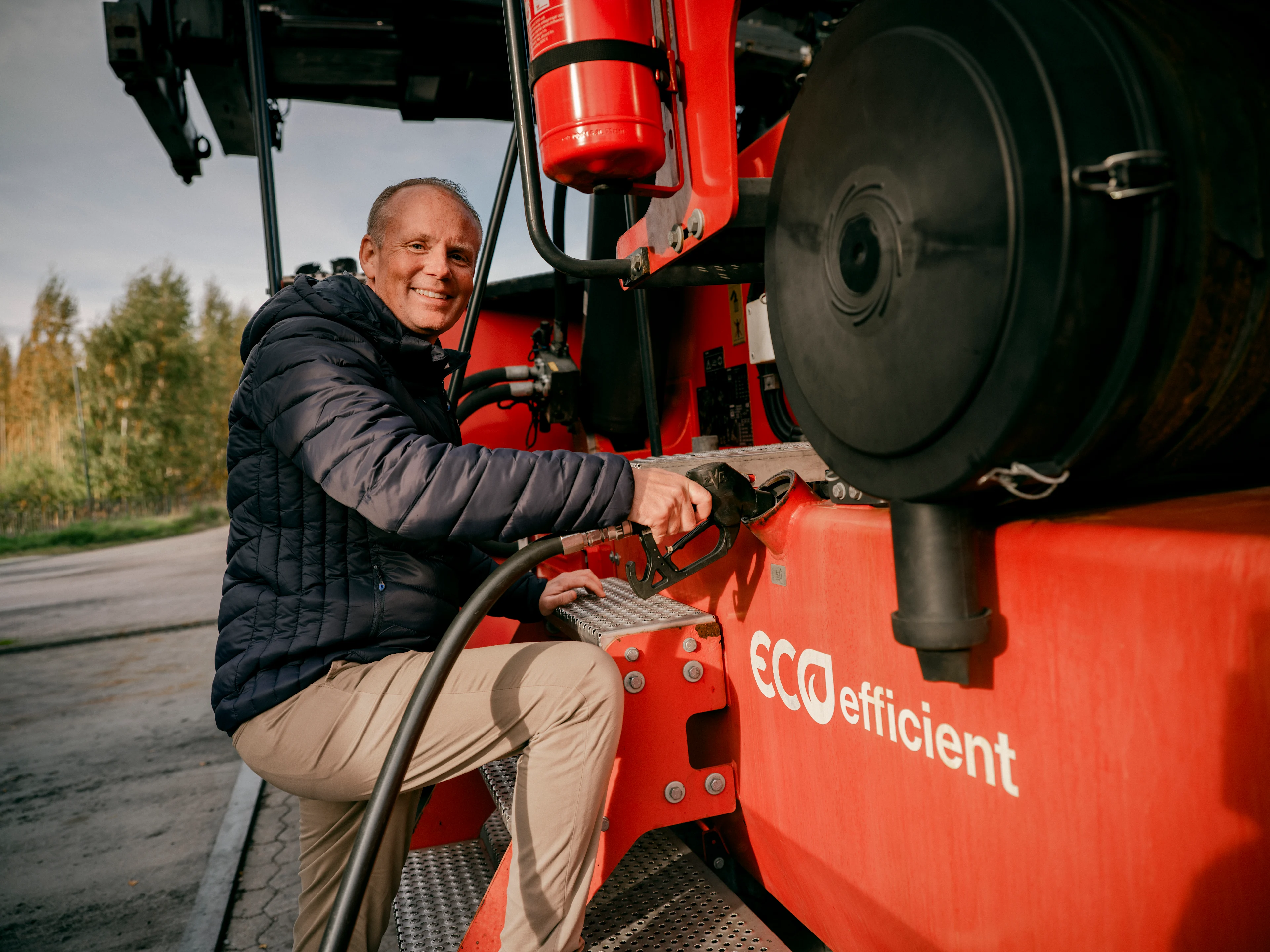
On the road, renewable diesel is already used alongside electrification to reduce reliance on fossil fuels. HVO100 is increasingly used in freight transport and other heavy duty vehicles.
However, road transport does not benefit from a long-term and legally binding fuel defossilization instrument like ReFUEL EU Aviation and FuelEU Maritime. A minimum quota for renewable liquid fuels should be included in the post-2030 EU RED transport target. This would help accelerate the uptake of biofuels in both new and existing vehicle fleets.
In aviation, SAF remains the only scalable solution currently available to significantly reduce emissions from commercial passenger and cargo flights. Thanks to the EU ReFuelEU Aviation Regulation mandates, SAF production is increasing rapidly and is expected to continue growing towards 2050. However, additional demand-side measures will be needed to accelerate its uptake across the aviation sector, including through the forthcoming revision of the EU Emissions Trading System (ETS) for aviation.
Importantly, with the use of renewable fuels, greenhouse gas emissions can be reduced immediately while leveraging existing vehicles, aircraft, infrastructure and logistics systems. This enables rapid deployment without requiring full system transformation.
Flexibility and scalability matter
One of the key advantages of renewable fuels is flexibility.
Advanced production technologies allow renewable fuels to be produced from a broad and increasingly diversified range of sustainable raw materials, supporting continued scale-up over time. This in turn, strengthens energy resilience and strategic autonomy.
With the right long-term policy certainty, the renewable fuels industry can mobilize significant investment, add additional production capacity and help contribute towards the much-needed accelerated shift from fossil to renewable energy over the coming decades.
Europe needs all renewable solutions
Renewable electricity will remain central to the transition. But renewable liquid fuels and other renewable energy carriers also have an essential role to play in the move away from fossil fuels quickly and at scale.
The focus should not only be on changing how we power mobility and industry. It should be on replacing fossil fuels wherever viable renewable alternatives already exist.
To strengthen resilience, improve energy security and accelerate emission reductions, Europe needs to accelerate the shift from fossil to renewable by leveraging and supporting all renewable solutions available today.